Click here to go to my Let’s plays in Digital Culture YouTube Video
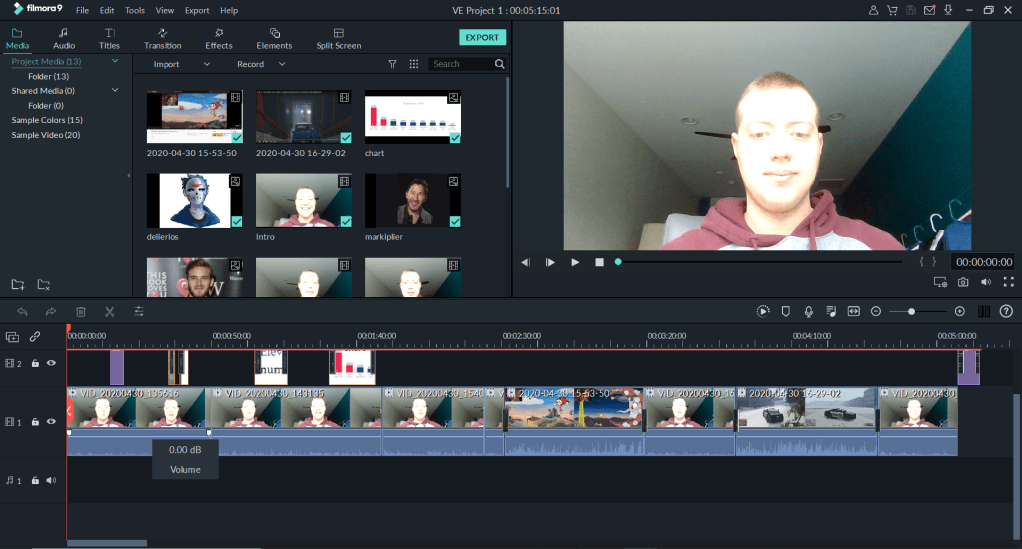
Click here to go to my Let’s plays in Digital Culture YouTube Video
Click here to be directed to my podcast about generational differences in technology.
I would consider myself a “newbie” when it comes to podcasts. I’m not too familiar with them but I’ve just started listening to them more and I can say I’ve been enjoying it. My favorite application for listening to podcasts is Google Podcasts on my Samsung Galaxy S8 Plus.
The first podcast I listened to was The Joe Rogan Experience, which I found in the “Top podcasts in Society and Culture” section. More specifically, I listened to episode number 1439 which includes special guest Michael Osterholm, who is an internationally recognized expert in infectious disease epidemiology. Joe Rogan and Michael Osterholm both discussed the potential severity of the current pandemic caused by COVID-19, or more generally known as Coronavirus. They also discussed potential ways that our society could help fix the virus. The Joe Rogan Experience is a very laid-back podcast that appeals to listeners who enjoy “casual listening”.
The second podcast that I listened to was Stuff You Should Know, which I found in the “Self-Improvement” section. more specifically, I listened to episode 1472 which is about how the current use of energy in the world is destroying the planet and how/if nuclear fusion reactors can benefit humans by reducing the carbon footprint that people have left behind. Stuff You Should Know is a podcast that talks about a bunch of random things that would be beneficial for you to know.
For the third podcast I listened to, I wanted to try listening to a podcast that I typically wouldn’t listen to, such as Artificial Intelligence with Lex Fridman. More specifically, I listened to episode 83 which includes special guest Nick Bostrom, who is a philosopher at University of Oxford and the director of the Future of Humanity Institute. In this episode, host Lex Fridman and Nick Bostrom discuss the future possibility of artificial intelligence becoming smarter than humans and the risks/consequences of creating super intelligent AI systems. Artificial Intelligence with Lex Fridman is a podcast that discusses the nature of artificial intelligence, science, technology, and much more.
Personally, I found that podcast are one of the “easiest” ways to get information compared to other media formats like social media and print. For example, with podcasts, all you really need to do is find the podcast you are interested in and just listen to it, whereas media platforms like print require you to be more physically engaged with it. Another thing I like more about podcasts than other media platforms is that podcasts have niche subjects they talk about, which makes it more engaging for the listener. One other thing that I like more about podcasts are the advertisements. For example, the majority of podcasts I’ve listened to have one or two advertisements per episode in the beginning of the episode, compared to media like television where there are multiple advertisements spread throughout the episode.
I would say that overall, I had a very positive experience with podcasts and will definitely be listening to more of them in the future.
Click here to go check out my article about political advertising on social media on Medium.com.

The event I decided to live blog is a campus talk about philosophy and the beliefs of Catholics, presented by Professor Patrick Gardner of the Philosophy department.
12:20pm: Everyone is gathering in the lecture hall and the staff is handing out free pizza
12:26pm: The staff and faculty are introducing themselves and the presentation has begun.
12:29pm: The professor leading the presentation, Dr. Patrick Gardner, asks the audience what faith means to us.
12:33pm: Professor Gardner discusses what makes things reasonable. Goal of your intellect = truth, and truth = alignment with reality.
12:37pm: Professor Gardner explains that a virtue is the same thing as a good habit.
12:45pm: Professor Gardner tells us that math proves that things can exist that are not physical.
12:50pm: Professor Gardner tells us that testimony is when we trust someone else for their word, instead of finding out information ourselves.
12:57pm: Professor Gardner explains that sometimes out thoughts are “unreasonable” and that we have to sometimes trust other people.
1:02pm: Professor Gardner explains that epistemic authority plus veracity equals trustworthiness.
1:08pm: Professor Gardner explains that faith is always about “things unseen”, which means you have to have faith in the things that aren’t always known to you.
1:15pm: Professor Gardner ends his presentation by asking the audience if they have any questions.
1:20pm: The audience applauds professor Gardner and everyone is starting to leave the lecture hall.
The three major topics on my news feed for February 26th, 2020 is the Syrian civil war, the retirement of famed tennis star Maria Sharapova, and how video game therapy could help people with ADHD.
The first article I read is called Children Freeze to Death as Attack Prompts Largest Exodus of Syrian War by Vivian Yee and Hwaida Saad, who are both international correspondents covering the Middle East for the New York Times. They talk about the harsh reality of the lives of the people of Syria. For example, they mention a father who couldn’t get to the hospital in time for his daughter who eventually froze to death. The New York Times website also provides pictures to show the reader the true severity of the situation.
The second article I read was called Maria Sharapova Changed Tennis with her Ambition, On and Off the Court by Louisa Thomas, who is a contributing writer for The New Yorker. She talks about the success and popularity of Maria Sharapova and how her legacy has changed the way that tennis is played today. For example, Sharapova was the first woman to play tennis with an “attack first” playing style. Many of the well-recognized tennis players today follow the same method.
The third article I read was called Video-game therapy may help treat ADHD, study finds by Dr. Angela N. Baldwin and Dr. Yalda Safai, who are both certified medical doctors writing for ABC News. They say that videogames that include multitasking can help not just people with ADHD, but any person by improving one’s attention. They go on to talk about how they are creating a video game specifically for people with ADHD to help with their behavioral strategies. They also mention that it can be used as another method to treat ADHD other than medication.
The three major topics on my news feed for February 25th, 2020 is the Corona virus epidemic, the presidential race, and Bob Iger steps down as Disney’s CEO.
The first article I read was called Coronavirus will test whether the planet can unite in the face of a global crisis by David Ignatius, a foreign affairs correspondent for The Washington Post. He talks about the potential dangers of the Corona virus and how doctors researching the virus have to face the dilemma of whether to tell the public of its true danger or risk false information being spread which would cause an unnecessary panic. However, he mentions that doctors studying the disease in Wuhan, China (which is where the disease started) have already begun developing a cure for the disease.
The second article I read was called If Biden does poorly in South Carolina, he should drop out by Ashley Pratte, a correspondent for CNN. She talks about how presidential candidate Joe Biden was the front runner for the Democratic party earlier in the year, but now with his lack luster performance he has given up his position as front runner to presidential candidate Bernie Sanders. She mentions that Joe Biden will have to have a win in the upcoming Iowa caucus in order to have enough support to continue in the presidential race.
The third article I read was called Bob Iger, longtime Disney chief, steps down as CEO by Catherine Thorbecke, who is a correspondent for ABC News. She talks about Bob Iger’s 15-year long stint from 2005 to 2020 and the accomplishments he has made for Disney in the past 15 years. Some of those accomplishments being the attainment of huge media companies such as Pixar, Marvel, Lucasfilm, and 21st Century Fox as well as the introduction of the Disney plus streaming service. Bob Chapek, who lead Disney’s theme park department, will take over as Disney’s new CEO.
I had just recently done my first live tweet, and I have to say it’s not what I expected. I went into it thinking that all I would be doing was giving a synopsis of the XFL game between the Los Angeles Wildcats and the DC Defenders (which was the event I decided to tweet), but instead I found myself interacting with other people who were also live tweeting the game. I have never used twitter before, so I soon realized how easy it is to connect with others who share similar interests as me. For example, some people liked and retweeted my comments. Overall I would say I had a very positive experience with live tweeting and using twitter as a social media platform.
Stacks, D. W., Salwen, M. B., & Eichhorn, K. C. (Eds.). (2019). An Integrated Approach to Communication Theory and Research (3rd ed.). New York, NY: Routledge. doi: https://doi.org/10.4324/9780203710753
In this article, authors Don W. Stacks, Michael B. Salwen, and Kristen C. Eichhorn dive deep into the reasons how and why people use technology to communicate and spread awareness of certain topics. More specifically, they talk about subjects like the agenda setting role of the news media and advertising with digital media. In chapter eight they discuss the significance of the role of social media in the news and how it has a huge impact on how people think about certain issues. In chapter fifteen they discuss the various components of digital advertising and how they are more likely to influence people versus traditional media. For example, they mention how digital advertising is more interactive, which makes the viewer more likely to interact with the product being sold (in this case political advertising on social media). Thus making them more likely to buy the product.
Toews, D. (2018). Social Life and Political Life in the Era of Digital Media (1st ed.). London, UK: Routledge. doi: https://doi.org/10.4324/9781315278698
In Social Life and Political Life in the Era of Digital Media, author David Toews discusses the good and bad effects social media can have on us. For example, he mentions that social media can be good because it promotes human curiosity and sociability. However, he also mentions that it can be bad because the increasing complexity of social media can lead to new types of conflicts, such as the more likely possibility of demagoguery. In chapter eight Toews talks about “political life in the era of social life”. He mentions that everyone “is a subject of modern media” and everyone has to deal with the inconveniences of the modern worlds social life.
Leiss, W., Kline, S., Jhally, S., Botterill, J., & Asquith, K. (2018). Social Communication in Advertising (4th ed.). New York, NY: Routledge. doi: https://doi.org/10.4324/9781315106021
In Social Communication in Advertising, authors William Leiss, Stephen Kline, Sut Jhally, Jackie Botterill, and Kyle Asquith discuss the history of advertising and how it has been used to shape the society we see today. More recently they have added a twelfth chapter which is about the rise of the internet and how big brand companies (like Google, Facebook, etc.) use their platform to influence the thoughts and ideas of their users. They talk about the idea of “microtargeting” which is the idea that people (in this case politicians) can specifically target certain audiences in order to further one’s agenda. They also mention that there is a blurred line between what is content and what is advertising.
I think it is safe to say that most platforms of social media have had a huge impact on the way we receive and interpret online information. This includes the way politicians spread their ideas and visions. The use of social media has many benefits, not just for the politicians, but for the reader as well. Those benefits being the ease of access to information, the instant availability of information, the better connection between the politician and their followers, and the cost effectiveness compared to traditional media.
However, The wide use of social media also has its down sides. Those being the greater possibility of false information and the ability of the politician to create unnecessary controversies.
First of all is how politicians use social media advertising to utilize the ease of access to information. Before social media was mainstream like it is today, people received their information through sources like newspapers. This made it more of a hassle for people to get the news, thus making it harder for the politician to reach out to people. According to a Pew Research Center study, more Americans today get their information through social media than through newspapers.
Elisa Shearer, a research associate for the Pew Research Center says that, “One-in-five U.S. adults say they often get news via social media, slightly higher than the share who often do so from print newspapers (16%) for the first time since Pew Research Center began asking these questions.”
Second of all is how politicians use social media advertising to utilize the instant availability of information. Today, it is very rare for a person to not have a smart phone or some device that allows them to access the internet. The ability to access information wherever you are allows politicians to post updates and really whatever is on their mind to their followers in a timely manner.
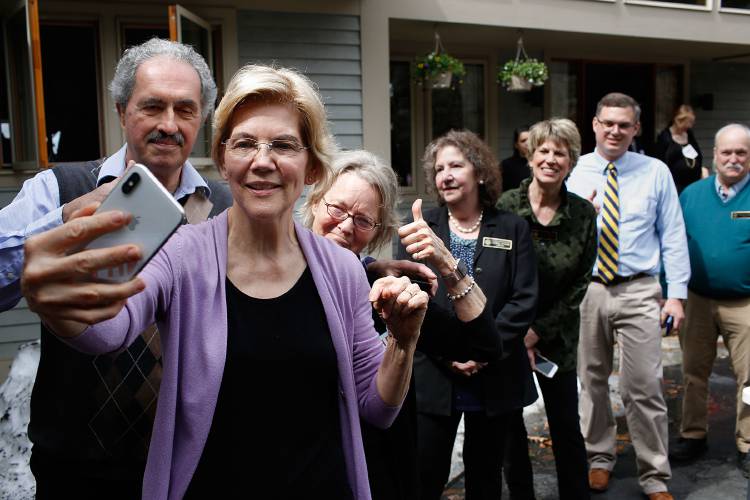
Third of all is how politicians use social media advertising to further connect with their followers. With traditional media like newspapers, politicians can not directly interact with the public. Newspapers must go through many editors before they can be published whereas social media allows politicians to talk directly to the public without the extra hurdles. Many politicians use social media to connect with their constituents, but the presidential candidate Elizabeth Warren is the most prevalent example.
At the 2019 democratic debate, Warren said “I made the decision when I decided to run not to do business as usual… and now I’m proud at 100,000 selfies.” This ability to be closer with her not only gives her supporters a picture with her but it also sends a message to everyone that she truly cares about her supporters by taking a large chunk of time out of her day. Warren can also gain valuable insight about what her supporters want her to accomplish.
Lastly is how politicians use social media advertising in order to be more cost effective. Many social media platforms ads today cost significantly less compared to traditional media. In addition, social media also allows the politician to target more specific audiences than traditional media. According to an article on Uhuru, “Social media marketing is far less expensive. You’ll pay a fraction of the traditional media price to reach the same number of people (or more) and you’ll be reaching the audience you want.”
However, one disadvantage of politicians using social media advertising is the greater possibility of spreading false information. As I mentioned previously, news companies like The New York Times and The Washington Post go through a process that requires the revision and fact checking of multiple people before it can be published, thus allowing better accuracy for their news report. Platforms like Twitter allow politicians to reach a large amount of people and say anything they want, regardless if it is true or not.
According to Tom Jarvis, a writer for an online news website called The Drum, says that “The weaponization of digital communication has led a campaign group made up of advertising professionals to call for better regulation on political ads. The Coalition for Reform in Political Advertising says at least 31 campaigns have been ‘indecent, dishonest or untruthful’.”
Another disadvantage of politicians using social media advertising is the ability of the politician to start unnecessary controversies. I feel that many of the political advertisements today are not necessarily what the politician wants to accomplish, but instead what the politician’s opponent doesn’t do well.
In conclusion, the use of social media has many benefits, not just for the politicians, but for the reader as well. Those benefits being the ease of access to information, the instant availability of information, and the better connection between the politician and their followers. However, The wide use of social media also has its down sides. Those being the greater possibility of false information and the ability of the politician to create unnecessary controversies.
 Grant's Blog